• Someone mentioned on Facebook that the total energy used by AI is now equivalent to Japan’s entire energy consumption. Later, I read a blog post that said data centers alone consumed “almost 2 percent of global energy demand in 2022”[1] — and that this demand could double by 2026, which would make it roughly equal to the electricity use of all of Japan. That’s enormous!

    AI is an incredible technology in so many ways. It helps doctors detect diseases, assists us on the road, makes planning easier, and helps us understand complex stuff. But it also comes with a massive environmental trade-off. And still, some people remain incredibly optimistic, believing AI will fix everything. Just a few days ago, The Washington Post [2] reported that the AI industry told U.S. lawmakers they must win the AI race — because, according to them, AI will solve the climate crisis. They literally said environmental concerns shouldn’t get in the way.

    But honestly, when has humankind ever scaled anything back? We don’t reduce, we just keep adding. Look at electricity: even though we’ve developed green energy and nuclear power, we haven’t stopped using coal. We just added more sources to meet our growing need for electricity.

    And it’s the same story everywhere. We introduce something new to improve an existing version, and then we need all the accompanying items — the accessories, upgrades, and subscriptions. It’s endless. Why can’t we break this vicious circle of constantly wanting more? It was probably important for our survival thousands of years ago. Today, things are different, and it’s depressing, because deep down, we know. We know that AI won’t save us from the climate crisis. It is just another technology add-on. We might delay the worst for a bit, maybe even a long time, but as the saying goes, “You can run, but you can’t hide.”

    The only real way to prevent this planet from overheating and the disasters that follow is to change how we live — and that includes everything from what we eat and say, to what we teach, to the stories we tell ourselves about progress, growth, and ultimately, happiness.


    [1] https://www.vox.com/climate/2024/3/28/24111721/climate-ai-tech-energy-demand-rising

    [2] https://www.washingtonpost.com/politics/2025/04/10/ai-race-china-energy-congress/

  • The author Philip Pullman once said, Poetry is not a fancy way of giving you information; it’s an incantation. It is actually a magical spell. It changes things; it changes you. I came across this beautiful and thought-awakening poem by Ursula Le Guin, and I could not resist sharing it here as a way for me to remember and cherish her work. This poem may not (directly) have anything to do with research, but it is a way of seeing the world that I resonate with. In research, in education, as well as in life, one should not be afraid of recognizing what is different, strange, or “other.” To be open and reflective about what we see, but also what we don’t see. To be daring and courageous, to explore perspectives and experiences beyond what we know. To travel and come back home, looking inward to understand how “new” ideas, information, and ways of seeing and knowing change us so we can grow.

    “Please bring strange things.
    Please come bringing new things.
    Let very old things come into your hands.
    Let what you do not know come into your eyes.
    Let desert sand harden your feet.
    Let the arch of your feet be the mountains.
    Let the paths of your fingertips be your maps
    And the ways you go be the lines of your palms.
    Let there be deep snow in your inbreathing
    And your outbreath be the shining of ice.
    May your mouth contain the shapes of strange words.
    May you smell food cooking you have not eaten.
    May the spring of a foreign river be your navel.
    May your soul be at home where there are no houses.
    Walk carefully, well-loved one,
    Walk mindfully, well-loved one,
    Walk fearlessly, well-loved one.
    Return with us, return to us,
    Be always coming home.”

    ― Ursula K. Le Guin

  • My first Koli Calling experience was in 2013. There I was, an undergrad presenting a paper on informal learning through Facebook, feeling like a fish out of water among the senior researchers. I had many doubts: Did I belong here? Would these experts find my work worthwhile? What would they think of my presentation? I practiced relentlessly for my presentation. I remember how nervous I felt. What really threw me for a loop was seeing everyone present without notes. In upper secondary school, we always had that safety net of paper prompts. Here, it seemed like everyone had their talks memorized. I remember thinking, “How on earth do they do that?” Looking back, I’m glad these memories are still vivid. They’re a testament to how far I’ve come. More importantly, they help me empathize with others facing similar challenges. It’s funny how our past experiences, especially the nerve-wracking ones, can become bridges to connect with others. Also, those initial feelings of inadequacy? They’re just the first step on the path to confidence and expertise.

    My second time in Koli was in 2017. I returned for the doctoral consortium (DC) led by Professor Matti Tedre at the University of Eastern Finland. While the technical content of my first DC has faded from memory, the people I met and the unique spa experience remain vivid. Koli Calling is an intimate conference, with around 60 participants attending this year. Its small size and remote location create an ideal environment for networking and socializing, as attendees can’t easily slip away. A highlight of the conference is the spa on the second day. It’s a fantastic opportunity to connect with peers. However, I’ve realized that my comfort in this setting reflects a certain privilege. The spa experience, while enjoyable for some, can feel exclusionary to others for various reasons.

    This year, I went to Koli to present my paper titled: Applying the Computer Science Capital Framework to Understand Factors Facilitating Children’s Decision to Participate in Code Clubs. Submitting my paper to Koli Calling came with a mix of anticipation and anxiety. I’d heard from colleagues that acceptance rates had been declining, making publication increasingly challenging. So when I received news of my paper’s direct acceptance as a full paper, I was elated. It felt like a validation from the computing education research community, affirming the value of my work. In academia, publishing is a crucial metric of a researcher’s capabilities and “worth.” The prestige of the venue matters, too, and Koli Calling, along with conferences like ICER, holds significant weight in our field.

    Despite this success, I occasionally grapple with doubts about the relevance of my research. “Does anyone really care about the sociology of computing education?” I sometimes wonder. However, these uncertainties were quickly dispelled by a chance conversation just before my presentation. I found myself chatting with two fellow Ph.D. students about their experiences in computer science education. Their stories were eye-opening. One confided that she had spent two years in tears, struggling through her studies. The other described how she had “suffered” (her exact word) through her CS education, having primarily chosen the field to please her parents rather than following her interests.

    The conversations I had with these PhD women impacted me. They shared stories of being among the few women in their computer science classes.  One particularly striking account was of a professor who openly stated that women were inferior programmers compared to men. Despite this discouraging environment, these women persevered. One of them, determined to prove her worth, not only completed her CS engineering education but graduated at the top of her class. She told me that she really appreciated the kind of work I was doing. I don’t think I have felt more of a sense of purpose. I am truly grateful for them sharing their experiences with me.

    These candid revelations underscored the importance of my research focus. They highlighted the authentic human experiences and challenges within computer science education. The encounter with these women reminded me that behind every statistic and theory are real people with real struggles and aspirations.

    Reflecting on my presentation experience, I noticed that while I initially felt nervous, a sense of calm and confidence washed over me as soon as I began speaking. The support from allies in the audience – Miranda, Naas, Anna, and Olli – whose encouraging nods were a constant reassurance, played a significant role in this transformation (Thank you!). The Q&A session following my presentation was particularly memorable. Lauri Malmi took the opportunity to emphasize to the audience the rarity and importance of sociological perspectives in computing education research. His words carried significant weight, given his standing in the field. This public recognition of the value of my work was incredibly affirming and meant more to me than I could express. Lauri’s use of his position and academic influence to support my research exemplifies the kind of allyship that can make a real difference in academia. It validated my work and highlighted the need for diverse perspectives in computing education research. Such endorsements can be pivotal in shaping the direction of future research and in encouraging more scholars to explore interdisciplinary approaches in computer science education.

    Reflecting on this Koli experience, I’m struck by the collaborative and supportive atmosphere that defines this conference. After my presentation, several attendees approached me to express their appreciation for my talk and its contribution to computing education. I’d like to extend my heartfelt gratitude to several individuals who significantly enhanced my Koli experience. Their engaging conversations, insightful reflections, kindness, and friendship were invaluable. Andreas, Anna, Anastasiia, Brian, Casten, Erkki, Ilkka, Juho, Katrin, Lauri, Lukas, Marco, Miranda, Naas, Nick, Olli, Sindre, Sten, and Zoia – your presence and interactions made this conference truly memorable.

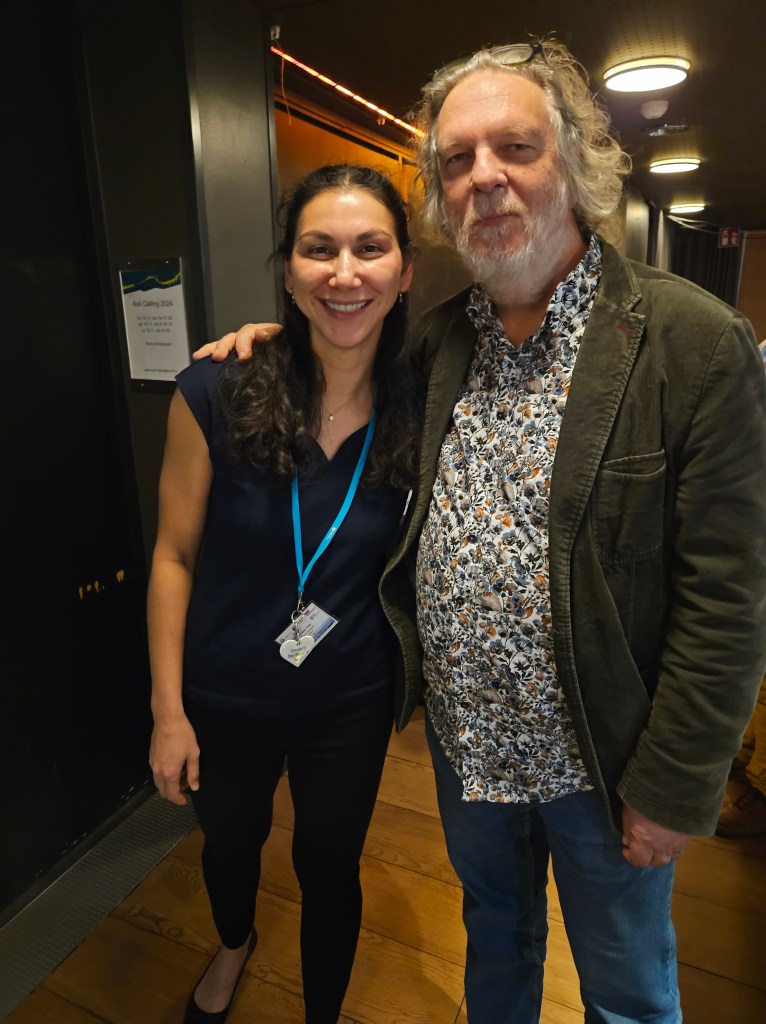
    You can find this year’s conference proceedings here. And finally, what is a blog post without some pictures 🙂

  • I am happy to share that my latest research publication (and the fourth paper of my thesis) is now available online. The title of the paper is “A Case Study of a Code Club’s Inclusion Policy and How It Is Implemented Online and in the Classroom”. The study examines how Kodcentrum’s practitioners/teachers work with inclusive practices online and in the classroom. Unfortunately, the paper is not open-access, so if you wish to get a copy, feel free to email me or contact me on ResearchGate. Here’s the abstract:

    This paper investigates the implementation of an inclusion policy within both the online and code club classroom settings at Kodcentrum (Code Centre), a non-profit organization located in Sweden. The primary objectives of this study encompass the identification of key focus areas outlined in Kodcentrum’s inclusion policy and the description of how these specific focus areas are translated into practice within Kodcentrum’s digital platforms and code club classroom environment. To accomplish these research aims, a two-pronged approach was employed. Firstly, a content analysis of Kodcentrum’s inclusion policy was conducted, revealing four primary areas of inclusion: 1) broadening participation and equal opportunity, 2) digital competence, 3) inclusive teaching, and 4) representation and diversity. Subsequently, an analysis of Kodcentrum’s online platforms and interviews with practitioners were undertaken to illuminate the practical implementation of these four identified focus areas. The findings not only shed light on the strategies employed by Kodcentrum to address inclusive practices online and in the code club classroom but also underscore some inherent challenges associated with each area. The paper ends with a discussion of the broader implications of these findings beyond the specific case of Kodcentrum, providing a basis for future research in the field of inclusive non-formal computing education.

    The paper was presented on Kos Island at the IEEE Global Engineering Education Conference, commonly known as EDUCON. This was my first experience attending the conference, and I was pleasantly surprised by the warm and welcoming atmosphere. While there are always areas for improvement at any event (e.g., reduce the queues, please), what stood out to me most was the emphasis on connection and collaboration among researchers. The organizers truly fostered an environment where sharing ideas and networking were prioritized.

    I was fortunate to be scheduled for the first presentation slot on the opening day. Presenting early has its advantages; it allowed me to focus on my talk without the lingering anxiety of waiting, enabling me to relax and absorb the inspiring work of others throughout the day. Below is a photo of me during my presentation. I felt it went exceptionally well (but then again, I enjoy presenting to others)—I managed to stay on time and engaged with the audience, receiving some insightful questions afterwards. One of the highlights of my presentation was connecting with fellow researchers in my field after my presentation and getting compliments from the lovely Joelyn de Lima.

    One of the most enriching aspects of attending conferences is the opportunity to connect with fellow researchers. EDUCON this year proved to be an exceptional experience in this regard. The atmosphere was conducive to forging new connections, and I found myself engaging with colleagues in ways I hadn’t before. Initially, I was worried about feeling lonely since I was going to the conference alone, but doing things alone is sometimes the most rewarding. Being alone made me open to interaction. I found myself striking up conversations in unexpected places, like the hotel reception. These chance encounters led to meaningful connections with fascinating researchers from diverse backgrounds. The conference challenged my preconceptions about the research community. I discovered a warmth that I hadn’t anticipated, forming friendships that I hope will endure beyond the conference halls.

    While I’m eager to see where these new connections might lead in the future, my immediate focus remains on completing my thesis. With four papers already under my belt, I’m keeping my fingers crossed for the acceptance of my fifth and final paper. EDUCON has not only contributed to my academic growth but has also expanded my professional network in ways I couldn’t have imagined. It’s a testament to the power of scientific gatherings in fostering both intellectual and personal development within the research community.

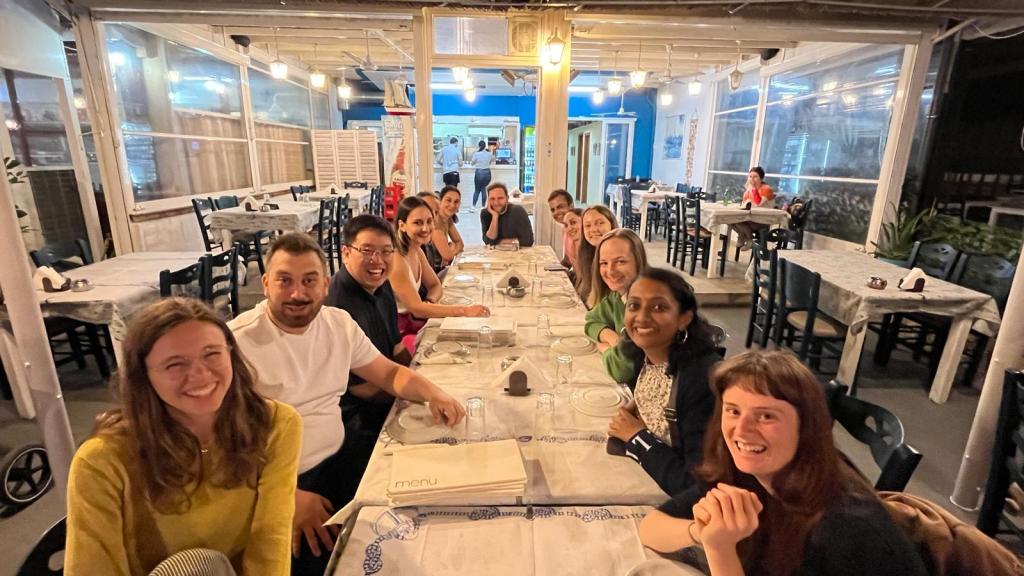
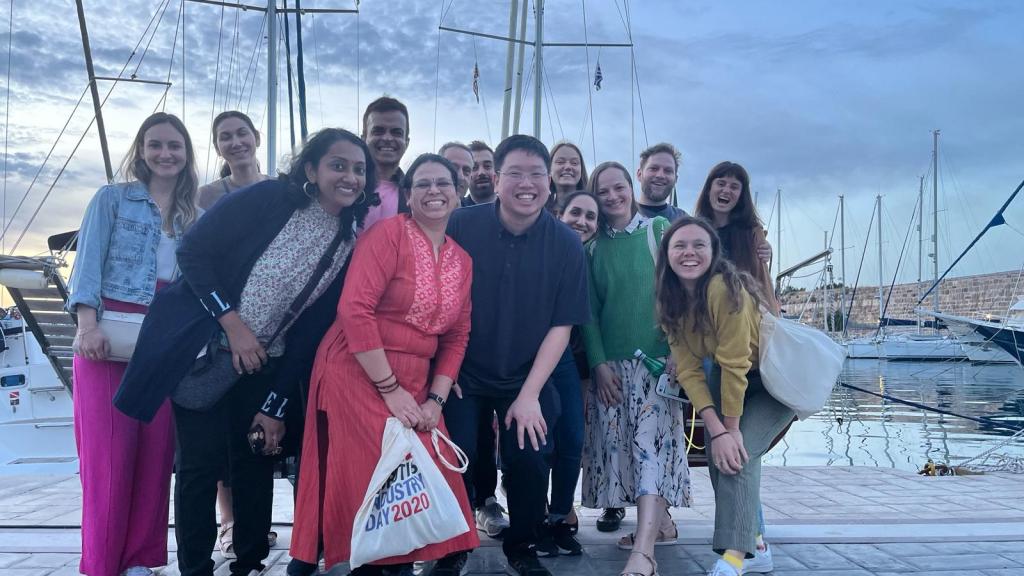
    Below are some pictures of our lovely little group. I think they conveyed nicely the time we spent together 🙂

  • Supervision and guidance in reviewing a PhD student’s work have been on my mind lately. I have been working intensely on my fourth PhD article and, therefore, received quite some feedback from my supervisors. Even though I think that supervising PhD students is a rewarding activity, it does come with challenges. If I’d be lucky enough to supervise PhD students one day, this is probably what I would tell them:

    Recognising that you will be the one doing the hard work

    Your supervisor is there to guide and support you, but the heavy-lifting is yours to do. Your PhD education is about you becoming an independent researcher. Therefore, you must try to show that you can achieve this. You will feel lost, you will run into blind alleys (and waste time), you will take sharp turns, and you will change your mind completely. And this is all part of the process. Remember that it is a privilege to be able to spend time in search of knowledge. So, cherish this time as a PhD student! To use the words of one of my favourite authors Yuval Noah Harari:

    “Finding truth lies in experimenting with unproductive paths, explore dead ends, make space for doubts and boredom, and allow little seeds of insights to slowly grow and blossom. If you cannot afford to waste time, you will never find the truth”

    Recognising that writing a paper is a long process

    Seeing a published paper can make you think that the process of writing it was straightforward and easy, but this couldn’t be further from the truth. It takes several attempts to get a paper in good shape for publication. Do not wait too long with sending the first draft to your supervisors. Remember the 80-20 principle, i.e. send the draft for feedback when it is about 80% good. Wait to fix the 20% until you know that you are on the right track. If you focus on improving the draft to reach 100% you might end up spending a lot of time working on things that most likely will not lead to significant improvement anyway. Or, worst case, you might be working on the wrong things.

    Recognise that supervisors can disagree

    Your supervisors will occasionally disagree on things, which can make you feel confused. Whose side should you “choose”? The important thing to remember here is that, often, there is no right/wrong answer, and there are multiple “correct” paths to take. Listen to your supervisors’ advice but make your own decisions. In the end, it is you who will be held accountable for your choices, so it is essential that you can justify them. Also, you don’t always have to do everything your supervisors ask. But you have to be able to explain why you didn’t do so.

    Recognise that your supervisors want the best for you

    At times it can feel like your supervisors are out to get you or to make your life harder. Sometimes, their comments can feel harsh, but in the end, it is never about you; it is about the text. Keep in mind that your supervisors care about you and want to help you get your text to the next level of quality.

    Last but not least, be humble

    The writing process is time-consuming and takes a lot of energy. It can occupy your mind constantly. Also, the feedback you get can be emotionally draining. It can sometimes be hard to see your work for what it is, especially when you have been working with it intensely. Take a few days’ breaks from the text to regain motivation, energy and “fresh eyes”. Let outsiders’ eyes take a look at your writing. Once you get the feedback on your text, it can take time to understand what the reviewers meant. Therefore, don’t jump into a defensive position. It is critical to remain open to critiques. Be humble, persevere, (take notes of their comments if the feedback is not in writing), calm down, and return to the reviewers’ comments when you are ready. I am not implying that the reviewers are always right, but you should always take their comments seriously.

  • I have been so busy lately that I realised that I forgot to mention that my latest publication is finally out! You can access the article here. If you wish to read the article but cannot access it for whatever reason, please feel free to contact me at: tina.vrieler@it.uu.se

    Abstract

    The aim of this conceptual article is to provide a framework and a lens for educators in diversifying and making CS education more inclusive. In this paper, we conceptualize the notion of computer science capital (CSC), which extends Bourdieu’s sociological theory of capital and Archer et al.’s work on ‘science capital’. The CSC concept was developed by contrasting the concept of science capital with a literature review on key factors affecting students’ aspirations in CS. We argue that there is a need to distinguish between science capital and CSC, because the types of capital that are considered legitimate vary between the field of natural science and computer science. The CSC concept uses a sociocultural perspective on learning and can be understood as a form of symbolic capital that is influential in facilitating students’ possibility to fully participate in, engage with, and form aspirations in CS. The CSC concept consists of three main components, each with associated subcomponents. We believe our CSC framework, along with the self-reflection prompts included in this article, will offer support for reflections for educators in their daily pedagogical work. By taking students’ various levels of social and cultural capital into consideration, educators can plan didactic activities with a focus to strengthen students’ various types of capital. This includes reflection on how implicit and explicit norms, beliefs, thoughts, expectations, values, and ideas can affect the pedagogical practices and ultimately the students. Only when we are reflective about our teaching practices can we be better positioned to construct a more inclusive teaching and learning environment.

    Tina Vrieler and Minna Salminen-Karlsson. 2021. A Sociocultural Perspective on Computer Science Capital and its Pedagogical Implications in Computer Science Education. ACM Trans. Comput. Educ.(September 2021). https://doi-org.ezproxy.its.uu.se/10.1145/3487052

  • During the past year, I have served as the chair of the PhD student council at Uppsala University’s faculty of science and technology. I applied for the chair position mostly because I wanted to learn about how the university functions. I will admit that the application was also a strategic move since it looks nice on the CV to have had a position with many responsibilities. Not unexpectedly, besides learning about the organisation of the university, I have come to learn a lot about myself as well. This blog post is (an incomplete) reflection and a summary of the things I have learned as chair of the doctoral council (TNDR, in short).

    • It is good practice to start the first meeting by setting expectations. Formulate and communicate what is expected from your colleagues. Avoid taking things for granted, even things that seem obvious to you. For example, if punctuality is important, then it is essential to communicate to your colleagues what they are expected to do if they cannot attend a meeting or run late.
    • Share your responsibilities. This is difficult for me since I am a control freak; I have difficulty trusting people to uphold my high standards. My advice to my fellow control-freaks is to learn to let go. Start small, for example, by delegating a few tasks that you care less about to others. Make a conscious decision to trust people because they can do the job as good as or even better than you can. Make a conscious decision to be silent and let other people be in charge/in the spotlight because you can learn from them as well.  
    • You cannot make everybody happy. A position with many responsibilities means that many people will rely on you. Making difficult comprises is part of the job; no matter how much you think you have thought of every detail, you will still miss something. Accepting the fact that you will sometimes let people down is a big step towards a more mature leadership.
    • Like the old saying goes: “To know oneself is the beginning of wisdom”. You get far by just recognising your strengths and weaknesses. Write down what they are and how you plan to work on your shortcomings next time you are in a similar position.
    • I have learned that in leading and supporting others, you need to get a holistic perspective of your colleagues. Essentially, all of us come with a bag full of experiences, emotions, opinions and so on that affect who we are. Beyond this, we are affected by the well-being of our mind and body and what goes on in our environment. All these factors affect us and our ability to work. For some people, it is very apparent that something is affecting them, while for others, it is harder to see. Remind yourself to have compassion. If your gut feelings tell you something is amiss with your colleague, it probably is. Show your colleagues you are there for them if they want to talk.
    • One of the most challenging tasks in work is how to set boundaries for workspace friendships. I tend to get emotionally involved with people instead of maintaining a friendly relationship. And the key here is friendly because being friendly and being friends are two very different things. My advice to someone with similar tendencies is to stay focused on the goals of your work and try not to let your relationship with people hinder your performance. But I have to admit that the friend-colleague relationship is a tricky one.  
    • The last point of advice has nothing to do with leadership or relationship. It is a gentle reminder to you and myself to always write when you feel inspired. Don’t wait until tomorrow; it might be too late by then.
  • According to Evelyn Fox Kellers, a vector (in mathematics) represents science. Within science, there are various actors, such as the researcher and the research participants. A vector has both a force and a direction, just like science and the actors in science; each with different agendas, plans, wills, prejudices and values. Science is not free from ideologies, political control, opinions, values ​​and interests because no human being or institution is free from ideas and values. Since we (researchers) are central in the production of knowledge – we perform scientific experiments, interpret results, convey implications of research and so on – we can conclude that no knowledge is free or objective. When a researcher seeks funding, the research project must meet several requirements. Often, these requirements are linked to economic or societal interests. It is rare that research, especially in technology or engineering, can be conducted for its own sake because research (often) depends on funding. In Sweden, tax money is a common form of research funding.

    I recently got acquainted with the Spacerpad project. In the Spacerpad project, the engineers have developed reusable sanitary pads for women living in poverty areas. The motivations for developing the sanitary pads were several, including menstruation’s impact on women’s everyday lives and educational  opportunities. According to previous research, women avoid going to school when menstruating because they do not have access to sanitary products.

    It is apparent in the description of the Spacerpad project that the engineers have a deep contextual understanding of the women’s situation. For example, many poor women have only limited access to water. Therefore, the sanitary pads come with a washing container that makes it easier to wash the sanitary pads with just a little bit of water. In addition, the sanitary pads dry very quickly and are equipped with a drying pocket in case the women want to dry the pads discreetly. In other words, the engineers made sure that the technology they developed was actually accepted and useful for women. The engineers also recognised the economic opportunity that came with the sanitary pads. They claimed that if the pads were to be produced locally, the pads would be more affordable, and the production of the pads would give rise to employment opportunities in production and businesses. If I were to use the vector metaphor by Evelyn Fox Kellers, I would say that the force and the direction of the vector in the Spacerpad project stem from women’s needs and desires, and second from economic possibilities. The project thus shows that economic gains and meeting the needs of women and the environmental can go hand in hand.

    The Spacerpad project meets all the requirements in the definitions I have found about engineering science. The project “produces systems or tools (sanitary pads in this case) with technology that are the result of science” [1]. In addition, the project solves a meaningful problem [5] (helping poor women live a decent life) by using scientific methods and creativity. KTH’s [4] description of engineering science also includes the engineers’ professional role, and in this case, this includes, understanding of women’s everyday lives, problems, needs, assets, values, etc. Being reflective and open is an important part of an engineer’s professional role.

    Let’s again go back to the vector metaphor by Evelyn Fox Kellers. We can understand that the power and direction of science (and the vector) are determined partly by scientific funding and partly by people in positions of power who decide who gets funded. Thus, they also determine how science should be prioritised. Historically, women have been in the minority in engineering and public spaces (in this case, where decisions on research funding are made). Given men’s dominance in technology, it is no wonder that men’s definition of what research is valuable or worth pursuing has been prioritised. Women’s living conditions, problems, and situations have thus not been seen as an arena where engineering solutions could take place. How is it that we have developed a space rocket that can take us on a lunar journey in 1969, and only over 40 years later have we found a sensible solution for one of women’s most common needs: adequate and comfortable menstrual protection?! It has taken so long for the engineers to prioritise (poor) women’s needs for sustainable sanitary pads that meet all women’s requirements. Fortunately, the number of women in engineering and public fields has increased (albeit slowly). Thanks to this, we can hopefully see changes in the type of science conducted in engineering.

    References

    [1]       “Vad är teknik? – Users.se.” https://users.se/vad-ar-teknik/ (accessed Jan. 17, 2022).

    [2]       NE.se, “teknik – Uppslagsverk – NE.se.” https://www.ne.se/uppslagsverk/encyklopedi/l%C3%A5ng/teknik (accessed Jan. 17, 2022).

    [3]       E. Sahlström, “Skillnaden mellan teknik och teknologi,” Evas skrivskola, Apr. 23, 2019. https://evasskrivskola.se/sprakriktighet/skillnaden-mellan-teknik-och-teknologi/ (accessed Jan. 17, 2022).

    [4]       KTH.se, “Ingenjörsvetenskap (ED1100) | KTH.” https://www.kth.se/social/course/ED1100/ (accessed Jan. 17, 2022).

    [5]       “Ingenjörsvetenskap,” Wikipedia. Mar. 19, 2021. Accessed: Jan. 17, 2022. [Online]. Available: https://sv.wikipedia.org/w/index.php?title=Ingenj%C3%B6rsvetenskap&oldid=49024405

  • Here’s a long blog post to compensate for the long absence 😉

    I visited some websites ([1] – [3]) that have justified why more women are needed in Science Technology, Engineering and Mathematics (STEM) professions. I have summarised the motivations from these websites in a bulleted list below.

    Women are needed in STEM to:

    • counteract negative stereotypes about what it means to have a STEM-related profession.
    • attract more girls to STEM (more role models).
    • contribute with a different perspective and solve problems from different angles (e.g. back in the days, the engineers designed the seat belts to fit the “average” male bodies and were, therefore, useless to a majority of women).
    • for the sake of diversity. Effective groups consist of a variety of people. Therefore, women in STEM are needed so that the engineering team becomes more efficient and can make better decisions.
    • there are many attractive and well-paid jobs within STEM, and it would be reprehensible if women lost the opportunity to get well-paid jobs.
    • strengthen the global economy. With more women in employment linked to STEM, we will also increase the country’s GDP.
    • enhance the power of innovation.
    • get an excellent education, since education within STEM is holistic and interdisciplinary.
    • ensure that the technical solutions are relevant and safe.
    • women have an obvious place in creating/influencing the technologies of the future.


    In research where psychological differences in men and women have been studied, it has not been possible to find any significant differences. For example, it is now generally accepted that “there are no significant gender differences in terms of general intelligence” [4, p. 69]. Connell & Pearse [4] thus claim that women’s and men’s abilities are comparable and, therefore, women and men are more alike than different. The stubborn image that women and men are two distinct beings is a product of media and pop psychologists’ stories about men and women’s superficial differences. When studies have noted dissimilarities between men and women, e.g. verbal ability, visual-spatial ability, mathematical ability and aggression, these are situation-based differences rather than general ones. For example, different studies define aggression differently, and depending on how aggression is determined, differences/similarities are found in men and women. Thus, with the help of research, we can actually “create, delete or reverse gender differences depending on the context” (Hyde 2005, quoted in [4]), and this is highly problematic. But if men’s and women’s abilities are equal in most respects, one can ask whether the argument that more women are needed in STEM to create more innovative and better technologies holds. On the other hand, one can ask the opposite question. According to much scientific evidence, “STEM abilities” are as widespread in women as men. With this in mind, why are STEM-related studies and professions not attractive for many women? Why do women, who would have succeeded well in STEM, choose to study/work with something else?

    There is a collection of assumptions about the characteristics of women and men. For example, women are assumed to be “caring, impressionable, talkative, emotional, intuitive, and sexually loyal; men are assumed to be aggressive, stubborn, quiet, rational, analytical and promiscuous” [4, p. 68]. Connell & Pearse believe that these assumptions are problematic because they stem from a view where these differences are considered natural (or biological) and not a result of our gender-structured social practices in a social setting. This framing, or what Connell & Pearse calls the reproductive arena, is a place where “the cultural categories of ‘men’ and ‘women’ are created” [4, p. 77]. The social practices we carry out in the reproductive arena are closely linked to our bodies and bodily functions. It is within the reproductive arena that gender is created, re-created and maintained.

    If we analyse STEM as a reproductive arena, we see that most of the bodies within that arena are male. These bodily practices create a pattern, a gender structure that excludes women (and certain types of men) that do not fit into the structure. According to this argument, the strong gender structure linked to the prevailing dominant form of masculinity within STEM must be broken if we want more women to choose STEM-related studies and professions. Therefore, the argument that more women are needed in STEM for more female role models would be strengthened if one accepts the argument of Connell & Pearse’s of the importance of bodies in a social context.

    Connell & Pearse write that “gender is a specific form of social embodiment” [4, p. 76] and that bodies are both objects and agents in social practices. In other words, the body and its abilities are a central part of understanding gender. The fact that different bodies have different needs, experiences, and history strengthens the argument that more female bodies and experiences are needed in STEM to ensure that the technical solutions created are relevant and safe for all bodies (e.g. the seat belt). But at the same time, it is problematic to assume that changes within STEM will occur if more women apply to the field. Connell and Pearse [4, p. 189] believe that there is no support that a field (e.g. a workplace) will change just because there are more women in the field. Connell and Pearse refer to Wajcman’s research on high-tech companies that had hired more female executives. Rather than the companies being feminised, women were instead “under severe pressure to behave the same as men: to work long hours, participate in conflicts at work, put pressure on subordinates and focus on profit” [4, p. 189]. In other words, we cannot assume that more women within STEM will automatically contribute to a “different perspective to solve problems” or “more effective and innovative groups”, if the prevailing culture in a field does not allow for different ways of being and doing. If one sincerely wants to attract and retain more women within STEM, then the dominant and problematic culture within STEM must be analysed.

    Finally, I want to address the argument that more women are needed in STEM because there are many attractive and well-paid jobs. The assumption here is that if more women get STEM-related occupations, they will also get better pay and employment, strengthening their position in society. Of course, more women should be able to take advantage of the resources available in the world. As it stands today, the world’s resources are allotted men to a greater extent than women [4, p. 198]. The fact that men’s wages are generally higher than women’s wages, even though the same work is done, shows society’s skewed gender values. But, as Connell and Pearse write, monetary income is not the only benefit that men have. “It is also about reputation, respect, services, security, housing, access to institutional power, emotional support, sexual pleasure and control over one’s own body” [4, p. 198]. In all these respects, men are allowed to profit to a greater extent from the patriarchal dividend. But what will happen in the future when more women enter STEM-related studies/professions? Will STEM lose its high status just like many other professional categories where women have taken over (e.g. secretaries)? It remains to be seen.

    References

    [1] B. Barratt, “The Need For More Women In STEM Roles Goes Beyond Simple Diversity,” Forbes, Nov. 17, 2018. https://www.forbes.com/sites/biancabarratt/2018/11/17/the-need-for-more-women-in-stem-roles-goes-beyond-simple-diversity/ (accessed Feb. 09, 2022).

    [2] G. Chan, “The Importance of Women in STEM,” The HEAD Foundation, Sep. 27, 2021. https://headfoundation.org/2021/09/27/the-importance-of-women-in-stem/ (accessed Feb. 09, 2022).

    [3] V. Silva, “Why We Need More Women in STEM,” Built By Me- STEM Learning, 190605. https://www.builtbyme.com/why-we-need-more-women-in-stem/ (accessed Feb. 09, 2022).

    [4] R. Connell and R. Pearse, Om Genus, 3rd ed. Göteborg: Daidalos AB, 2015.

  • I am currently reading a very interesting course in the philosophy of artificial intelligence. This week I got introduced to The Frame Problem of AI, and I thoroughly enjoyed this reading so I thought I’d share my post on the assignment with you.

    According to Dennett, the frame problem is an epistemological problem rather than a computational problem. Why is this? Epistemology concerns the theory of knowledge, what is knowledge, how do we obtain and validate it? If we are to transfer knowledge to a robot we have to be able to answer the philosophical questions related to knowledge. How do human beings come to know and act in a common-sensical way? I think Dennett shows clearly that this is a very hard (if not impossible) question to answer and, therefore, equally hard or impossible to implement in a robot.

    Firstly, we are biological beings, we are born knowing things about the world without ever having to be (explicitly) taught (e.g. that a smile shows friendliness). We are no tabula rasa like robots where you have to program everything in order for it to act intelligently (even that it has to smile to look friendly). But we also learn from experience and from connecting that experience with other experiences. Although sometimes, we can connect two completely unrelated experiences and learn from that to solve problems. How can this complex learning process ever be “taught” to robots? One way of doing this is through introspection, or to use the words of Dennett “an examination of what is presented or given to consciousness” [1, p. 186]. But, as Dennett writes, introspection has limitations. We cannot observe or explain everything we do. “For some time now we have known better, we have conscious access to only upper surface, as it were, of the multilevel system of information-processing that occurs in us” [1, p. 187]. Even when we seem to be deliberately thinking about how to solve a difficult task, we cannot explain all the details on how we solved these problems. Also, even if we try to plan the problem-solving process to the most meticulous detail we still may encounter other unpredictable or “surprise” problems. Human beings are flexible enough to deal with these problems but how can we ever program into a machine to deal with these problems if we, the people who build them, are not even aware or prepared for the problems in the first place.

    Secondly, the real world is full of noise, but thankfully our brains are experts at filtering this information so that we are not overloaded. Human beings are very good at noticing the most important things that we need to notice and to ignore a bunch of things that are not relevant. The question of what is relevant information depends, of course, on what we plan to do, the context etc. How do you prepare a machine for every single situation that it might encounter? In addition to this, how do we prepare the machine for an ever-changing world? This relates to qualification problem, and this is a very important part of the frame problem according to Dennett.

    Thirdly, according to Dennett, another aspect of the frame problem is the problem of induction. “The problem of having good expectations about any future events, whether they are one’s own actions, the actions of another agent, or mere happenings of nature” [1, p. 194]. How do we answer the general question: “given that I believe all this (have all this evidence), what ought I to believe as well (about the future or about unexamined parts of the world)?” (ibid.) You need a vast amount of knowledge and experience to answer this question (symbolic problem). And if you are a robot, this information has to be store and readily accessible (syntactic problem) Can we ever give a robot enough experience for it to answer this question intelligently? Even if a robot can answer this question, the question is still how it can represent this knowledge effectively?

    Lastly, I think it is important to keep in mind that human beings make mistakes so we should expect nothing less of a robot. But what kinds of mistakes can we tolerate, that is the question, because when it comes to the question of responsibility – who should take the blame? The machine with a “mind” or the programmer. This is also my first question. Another question that I have is related to the concept of cognitive wheel. Even though we might be able to mimic the cognitive subcomponents in the brain, we are still not one step closer to understanding how human common-sense making is accomplished. My question is: why does this matter? Why should we aim to understand human sense-making with the help of robots? If we stop aiming to create common-sense making human beings out of robots then we can also ignore this question, and just enjoy the benefits of robots being the square machine that it is.

    Another thing I’ve been thinking about is the obsession with making robots like “human” and “excessively smart”. This surely must be a gendered question because, evidently, the field of AI has, and is, dominated by the male gender. I am convinced that this gendered aspect has affected everything related to computing and AI. I guess you could say that AI is men’s attempt to defeat women in the only one thing that a female person can do that a man can’t, namely to create life.

    Reference

    [1]       D. Dennett, “Cognitive Wheels: The Frame Problem of AI,” in Minds, Machines and Evolution, Cambridge University Press, 1984.