My first Koli Calling experience was in 2013. There I was, an undergrad presenting a paper on informal learning through Facebook, feeling like a fish out of water among the senior researchers. I had many doubts: Did I belong here? Would these experts find my work worthwhile? What would they think of my presentation? I practiced relentlessly for my presentation. I remember how nervous I felt. What really threw me for a loop was seeing everyone present without notes. In upper secondary school, we always had that safety net of paper prompts. Here, it seemed like everyone had their talks memorized. I remember thinking, “How on earth do they do that?” Looking back, I’m glad these memories are still vivid. They’re a testament to how far I’ve come. More importantly, they help me empathize with others facing similar challenges. It’s funny how our past experiences, especially the nerve-wracking ones, can become bridges to connect with others. Also, those initial feelings of inadequacy? They’re just the first step on the path to confidence and expertise.
My second time in Koli was in 2017. I returned for the doctoral consortium (DC) led by Professor Matti Tedre at the University of Eastern Finland. While the technical content of my first DC has faded from memory, the people I met and the unique spa experience remain vivid. Koli Calling is an intimate conference, with around 60 participants attending this year. Its small size and remote location create an ideal environment for networking and socializing, as attendees can’t easily slip away. A highlight of the conference is the spa on the second day. It’s a fantastic opportunity to connect with peers. However, I’ve realized that my comfort in this setting reflects a certain privilege. The spa experience, while enjoyable for some, can feel exclusionary to others for various reasons.
This year, I went to Koli to present my paper titled: Applying the Computer Science Capital Framework to Understand Factors Facilitating Children’s Decision to Participate in Code Clubs. Submitting my paper to Koli Calling came with a mix of anticipation and anxiety. I’d heard from colleagues that acceptance rates had been declining, making publication increasingly challenging. So when I received news of my paper’s direct acceptance as a full paper, I was elated. It felt like a validation from the computing education research community, affirming the value of my work. In academia, publishing is a crucial metric of a researcher’s capabilities and “worth.” The prestige of the venue matters, too, and Koli Calling, along with conferences like ICER, holds significant weight in our field.
Despite this success, I occasionally grapple with doubts about the relevance of my research. “Does anyone really care about the sociology of computing education?” I sometimes wonder. However, these uncertainties were quickly dispelled by a chance conversation just before my presentation. I found myself chatting with two fellow Ph.D. students about their experiences in computer science education. Their stories were eye-opening. One confided that she had spent two years in tears, struggling through her studies. The other described how she had “suffered” (her exact word) through her CS education, having primarily chosen the field to please her parents rather than following her interests.
The conversations I had with these PhD women impacted me. They shared stories of being among the few women in their computer science classes. One particularly striking account was of a professor who openly stated that women were inferior programmers compared to men. Despite this discouraging environment, these women persevered. One of them, determined to prove her worth, not only completed her CS engineering education but graduated at the top of her class. She told me that she really appreciated the kind of work I was doing. I don’t think I have felt more of a sense of purpose. I am truly grateful for them sharing their experiences with me.
These candid revelations underscored the importance of my research focus. They highlighted the authentic human experiences and challenges within computer science education. The encounter with these women reminded me that behind every statistic and theory are real people with real struggles and aspirations.
Reflecting on my presentation experience, I noticed that while I initially felt nervous, a sense of calm and confidence washed over me as soon as I began speaking. The support from allies in the audience – Miranda, Naas, Anna, and Olli – whose encouraging nods were a constant reassurance, played a significant role in this transformation (Thank you!). The Q&A session following my presentation was particularly memorable. Lauri Malmi took the opportunity to emphasize to the audience the rarity and importance of sociological perspectives in computing education research. His words carried significant weight, given his standing in the field. This public recognition of the value of my work was incredibly affirming and meant more to me than I could express. Lauri’s use of his position and academic influence to support my research exemplifies the kind of allyship that can make a real difference in academia. It validated my work and highlighted the need for diverse perspectives in computing education research. Such endorsements can be pivotal in shaping the direction of future research and in encouraging more scholars to explore interdisciplinary approaches in computer science education.
Reflecting on this Koli experience, I’m struck by the collaborative and supportive atmosphere that defines this conference. After my presentation, several attendees approached me to express their appreciation for my talk and its contribution to computing education. I’d like to extend my heartfelt gratitude to several individuals who significantly enhanced my Koli experience. Their engaging conversations, insightful reflections, kindness, and friendship were invaluable. Andreas, Anna, Anastasiia, Brian, Casten, Erkki, Ilkka, Juho, Katrin, Lauri, Lukas, Marco, Miranda, Naas, Nick, Olli, Sindre, Sten, and Zoia – your presence and interactions made this conference truly memorable.
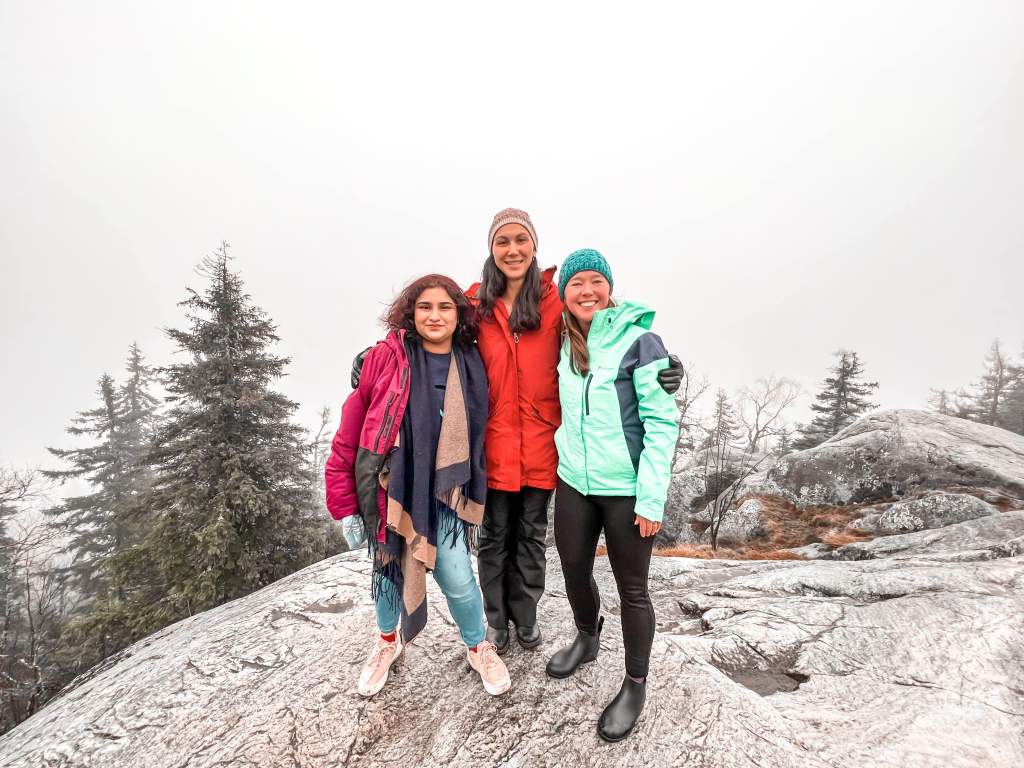
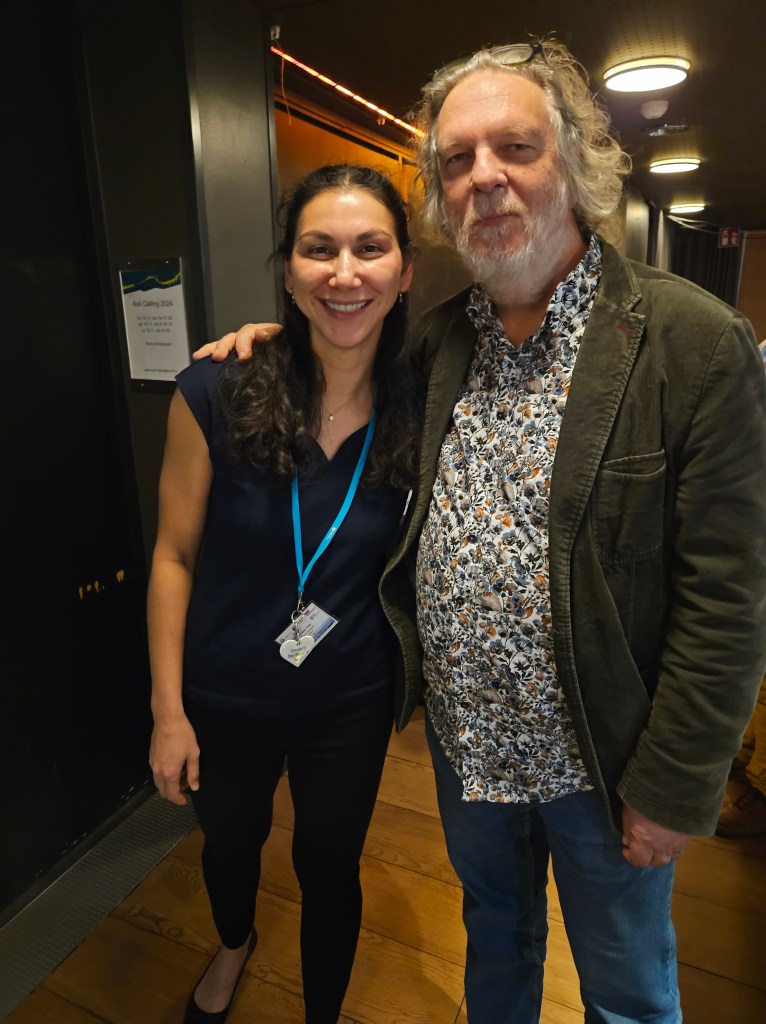
You can find this year’s conference proceedings here. And finally, what is a blog post without some pictures 🙂


 Tina Vrieler
Leave a comment